Who Does God Say That I Am?

woman shaped by PotterGod alone has the right to bestow my identity because “It is he who has made [me] and [I am] his” (Ps. 100:3). I am His creation (Gen. 1:27). All people were created in God’s image, not the image of animals. God is holy, not sexual, sensual, or captive to instincts. God says, “You shall be holy, for I am holy” (1 Pet. 1:16).

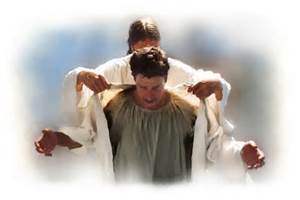
But the Fall into sin introduced horrible corruption to the human race, so that now the thoughts and desires of people are sinful and centered on serving the self (Gen. 6:5; Eph. 2:3). Christians, however, have been given the Holy Spirit who begins in them a “new creation” (2 Cor. 5:17; Gal. 6:15), and starts to re-form the image of God in them (Col. 3:10). All of us struggle with our sinful human nature because we are sons of Adam and daughters of Eve, but we are not bound to that human nature because of the washing and renewal of our Baptism (Tit. 3:5-8). In my Baptism, Jesus Christ restored my identity as an “heir” of eternal life. I am strengthened to “abstain from the passions of the flesh, which wage war against [my] soul” (1 Pet. 2:11). Re-creation in Christ makes me God’s adopted child who is invited to cry “Abba! Father!” (Rom. 8:15).

My body is “a temple of the Holy Spirit” bought at great price (1 Cor. 6:19). I am a treasure of God for whom Jesus gave all He had. In Christ crucified, I reclaim my identity. Since Jesus is holy, God declares me holy through faith in Him. “I have called you by name,” God says. “You are mine” (Isa. 43:1). “‘I will be a father to you, and you shall be sons and daughters to me,’ says the Lord Almighty” (2 Cor. 6:18). Jesus spoke to my full person and human identity when He said, “You shall love the Lord your God with all your heart and with all your soul and with all your mind and with all your strength” (Mk. 12:30).

I hold to a body-soul anthropology or understanding of the origin, nature and destiny of mankind as expressed in the Athanasian Creed. I believe I will be resurrected, not as a disembodied spirit, but with a perfect body joined with a perfect soul. In heaven, I will not be an angel but my resurrected body will be like that of angels (Matt. 22:30). I will neither marry nor be given in marriage. This is a sound argument against the idea that human beings are fundamentally “sexual”. If that were true, in the resurrection I would be somehow less than human.

Adapted from
The Failure of Sex Education in the Church:
Mistaken Identity, Compromised Purity
by Linda Bartlett (Amazon)

Sex Education in the Church

My book coverOn May 29, 2014, Todd Wilken helped his listeners learn more about the new book entitled The Failure of Sex Education in the Church: Mistaken Identity, Compromised Purity.  The book is available on Amazon.

Please listen to the interview (following a brief commercial) by clicking Sex Education in the Church

Too Long at the Animal Circus

creepy circus clowns“Sexuality” appears to be the one “right” above all others. It dictates how things are done in the marketplace, classroom, court of law, and military. It even threatens to re-define marriage.

How did this come to be? I think it’s because we stayed too long at the animal circus.

At the animal circus, children are wrongly identified. They are not seen as their Heavenly Father sees them, but as people of a different faith want to see them. “Children,” said Alfred Kinsey, “are sexual from birth.” Kinsey didn’t mean that children are either a boy or a girl. He meant that children can enjoy and benefit from early sexual activity.

Something smelled foul in the circus tent but those who wanted to hear that even children are defined by their “sexuality” — indeed, their sexual desires and inclinations, were ecstatic. Others, including many Christians, were troubled but decided to accept the data of this “social scientist” and examine human sexuality in light of his “new information”. Kinsey made a mockery of science. Nevertheless, he and other humanists such as John Money, Mary Calderone and Lester Kirkendall set in place a social movement that changed the way we see our children and each other. Children were sexualized and imagined as little more than animal-like beings captive to urges and desires.

The “progressive” folk among us already knew they were “animal-like.” Charles Darwin said so and many believed him. All who resisted the God who creates life and, therefore, has authority over that life determined that now they had “license” to do as they pleased. Piggy-backing (how animal-like!) on the theory of Darwin, Kinsey plunged into “scientific” study with the goal of breaking down all sexual inhibitions. Kinsey’s “scientific” study has been exposed as fraudulent and criminal. (See resources below.) Yet the distorted truth of a psychologically twisted and sexually deviant Kinsey seems to have more influence on our present culture than God’s Word. Kinsey and other secular humanists lured parents, pastors and teachers away from guarding purity, modesty, and the innocence of children. The animal circus of sex education went on the road.

“Get your tickets here!” cried Kinsey. “Come one, come all!” cried Mary Calderone of SIECUS (Sexuality Information and Education Council of the U.S.). Four generations have been trained to believe that “sexuality is our entire selves, influences us in every way, and encompasses everything” but left clueless about what it means to be male or female. Sex education has equipped boys and girls to be sexual, not relational; all about me, rarely about others; less inhibited, but more at risk; and far more hopeless than hopeful.

We’ve been too long at the animal circus. What is the evidence?

  • Parents assume that their children will be sexually active.
  • Too many young women are held captive by the political correctness of feminism and denied the biological facts that explain why a female body is more vulnerable than a male body physically and psychologically. (Visit Miriam Grossman, M.D. or read her book, Unprotected.)
  • The brains of young men and women have been “re-wired” and addicted to sex. (Read Hooked by Joe McIlhaney, M.D., or You’re Teaching My Child What? by Miriam Grossman, M.D.)
  • An increased number of husbands and wives who have partnered intimately with others prior to their marriage are discontent and in search of having their “needs” better satisfied.
  • Pregnancy resource centers hearing from adolescent girls who consider themselves “normal” because they dress “hot” and have casual sex but can’t understand why they are “not happy” or “content”.
  • Girls demanding the “right” to “shower together” during church retreats and experiment on Christian campuses with bi-sexual and lesbian lifestyles. (These examples from personal testimonies.)

The Church stands guilty. Fearful and not wanting to be irrelevant, Christians filed God’s Word on sexual purity under “Unrealistic.” Willingly or unwilling, they adapted the ways of circus trainers to keep pace with the world. Too many Christians assumed that as long as Jesus was part of sex education, their children would be all right. But they are not all right. Children pay the price every time we try to wrap Jesus around the foolishness of the world.

Nowhere in Scripture does God identify male and female as “sexual beings”.  He does not call male and female to be “sexual” but to be “holy” (1 Peter 1:14-16).  God created male and female to be so much more than our urges, desires and perceived “needs”. We are, by His design, persons of great significance with bodies, minds and souls. We are male or female and, no matter if we are young or old, single or married, we can live in relationship to our brothers, sisters and neighbors. We can work and play side by side without any hint of sexual intimations.

Is there hope? Yes… away from the animal circus.

Away from the animal circus, we are better able to see children as God sees them. Each child is God’s own (Isaiah 64:8) and called by name (43:1) to be a vessel for honorable use, set apart as holy, useful to the master of the house, ready for every good work (2 Timothy 2:21).

Followers of Christ Jesus need to abandon the animal circus. The structure is unsound and the tent began to collapse long ago.

Resources:
The Failure of Sex Education in the Church: Mistaken Identity, Compromised Purity
by Linda Bartlett (Amazon)
Stolen Honor, Stolen Innocence by Judith Reisman, Ph.D.
(Original title Kinsey: Crimes and Consequences)
The Children of Table 34 (google for Youtube video)
The Kinsey Syndrome (DVD)

This post was first written 3-23-2011 and posted by Ezerwoman

Significance & Permanent Place of Clothing (#5 in series)

wedding feastIs clothing a thing indifferent?  In His parable of the wedding feast, Jesus has something to say about the significance of clothing.

But when the king came in to look at the guests, he saw there a man who had no wedding garment. And he said to him, ‘Friend, how did you get in here without a wedding garment?’ And he was speechless” (Matt. 22:11-12).

In the tradition of the Israelites, invited guests were expected to wear festive wedding garments.  Such garments could be provided by the host.  So, when the man fails to dress in appropriate clothing freely given to him, he offends the host.  Jesus was not describing party attire here.  The garment freely offered by the host signifies the righteousness of God, which covers our sin” (cf Is. 61:10; Gal. 3:27).

Revelation 16:15 explains more about the significance and permanent place of clothing.

Behold, I am coming like a thief! Blessed is the one who stays awake, keeping his garments on, that he may not go about naked and be seen exposed.”

White garments serve as a symbol for Christian righteousness which is bestowed through Christ at Baptism. Here, again, we are reminded of our earthly and eternal identity: we are holy as opposed to sexual; uncommon and useable by God as opposed to common and useable by anyone. Revelation 19:8 speaks about the marriage of the Lamb (Jesus) to His Bride (the Church), saying:

It was granted her to clothe herself with fine linen, bright and pure for the fine linen is the righteous deeds of the saints.”

Commentary on this verse explains that the bride’s preparations for the marriage are the result of God’s grace and Spirit, not simply her own efforts.  The saints’ righteous deeds which, in this passage are identified with spiritual adornment, are a gift granted by God and not a human achievement.  (The Lutheran Study Bible, 2228.)

Nakedness, modesty and clothing should take on a new meaning for children of God.  If we infer that embarrassment is unnecessary or even unnatural, then I believe that we might actually do a disservice to children and ourselves.

There is no shame in blushing. It’s natural, too!  When the wind whips up a woman’s skirt, she quickly responds by pulling it down. I’ve watched girls in strapless dresses with their boyfriends out dining before prom who are so distracted by tugging and tucking that I can’t help but wonder: What will they do when the dancing begins?

To be embarrassed about nakedness is God’s natural protection for our body and spirit. We cannot separate the physical and spiritual parts of our body. The two affect each other. In this world, men and women see each other through sin-damaged eyes. We are too easily tempted to wrong thought or action by a warped vision and perspective. We owe our sons and daughters the truth about nakedness and the reason for clothing. The world cares little, if at all, about our vulnerability. It is God, because of His great love for us, who wants us covered. When we are not, God uses natural emotions of shame and embarrassment for our benefit.

Physical clothing actually affords brothers and sisters in Christ—married or single—more freedom to interact with one another in their vocations of biblical manhood and womanhood.  They are less distracted and able to do the work laid before them, whether that is studying in class or clerking in a store. As baptized sons and daughters of God in Christ, we are dressed in preparation for heaven. We are not left naked—physically or spiritually. God covers our body and spirit with appropriate clothing so that we are less vulnerable and tempted to stray away from Jesus who waits for our meeting with Him in heaven.

It cannot please God when an adult tries to remove a child’s embarrassment. Embarrassment and shame, like guilt, can move all of us to the Cross where repentant sinners can robe up in Jesus’ righteousness. More than anything, we should want to help our children appreciate Jesus’ robe of righteousness which makes them holy in God’s eyes. Wearing that robe, children of God are called not to sensual living, but holy living.

From Chapter 14, Questions 88 & 89
The Failure of Sex Education in the Church: Mistaken Identity, Compromised Purity
by Linda Bartlett, Copyright 2014 Titus 2 for Life
Our Identity Matters

Physical and Spiritual Clothing (#4 in series)

robe of righteousnessEvery person conceived and born after the Fall is a sinner. Every person who believes in Jesus Christ as their Lord and Savior is a saint. Clothing, which is significant in Scripture, speaks to both of these identities.

After the Fall, a loving God provided Adam and Eve with two kinds of clothing. Coats of animal skins covered their physical body, but the covering of Jesus Christ was promised for their spiritual body. As forgiven sinners, we are clothed in the garment of salvation which is the robe of righteousness given freely to us by Jesus Christ (Isa. 61:10). Wearing the robe of His Son, God sees us as holy. However, it is a consequence of the fallen world that men and women see each other through sin-tainted eyes. For this reason, God tells women to dress modestly—in a way that professes faith—so that they do not tempt an admiring man by way of false glory to sinful thoughts or deeds.

Adam and Eve covered only certain parts of themselves with fig leaves, but God designed clothes to cover their bodies. From this we know that Adam and Eve could not sufficiently cover themselves physically (nakedness) or spiritually (works righteousness). The work of their hands was neither acceptable nor enough. There was absolute necessity for the full covering and righteousness of the Savior, Jesus Christ. Today, whenever we consider clothing, we can remember that its purpose is to cover our bodies and protect us from our own corrupted thoughts.

Here is where instruction in purity does what sex education does not. Clothing is not usually considered very significant in sex or sexuality education. But to help male and female of any age understand that we are called to a lifestyle of purity means that we must talk about clothing.

From Chapter 14, Question 87
The Failure of Sex Education in the Church: Mistaken Identity, Compromised Purity
by Linda Bartlett, Copyright 2014 Titus 2 for Life
Our Identity Matters

Clothing Outside the Garden (#3 in series)

adam and eve outside gardenHusbands and wives in Christ can be pleased by God’s design for sexuality and be unashamed in nakedness, but our corrupted nature reminds us that we no longer live in the Garden.

At the time when Adam and Eve were completely naked and without embarrassment (Gn. 2:25), the world was perfect. Man and wife had no lustful thoughts. There was no such word as “sexy;” instead, the word was “holy.” God covered animals with fur, feathers, scales, and so on. But God covered man and woman with His glory. And why wouldn’t He? He made male and female in His image. God Himself is covered in glory (Ps. 104:1-2; Isa. 61:3-10).

Sin changed everything for Adam and Eve—and all of us. Their eyes were opened and they knew that they were naked (Gn. 3:7). Nakedness was no longer “good.” Their sin left them exposed and vulnerable. New emotions of embarrassment and shame caused them to cover themselves with fig leaves. They sewed for themselves a loincloth and bikini of fig leaves but, still very embarrassed, ran to hide. God could have left Adam and Eve in their naked and hopelessly sinful state but He had loving compassion. Before He sent Adam and Eve out of the Garden, God did something for them that only a merciful God can do. He knew that a bikini or loincloth of fig leaves would not be enough covering in the sinful world so He covered them with garments of skins.

Martin Luther writes,

Here Adam and Eve are dressed in garments by the Lord God Himself. Whenever they looked at their garments, these were to serve as a reminder to them to give thought to their wretched fall from supreme happiness into the utmost misfortune and trouble. Thus they were to be constantly afraid of sinning, to repent continually, and to sigh for the forgiveness of sins through the promise Seed. This is also why He clothed them, not in foliage or in cotton but in the skins of slain animals, for a sign that they are mortal and that they are living in certain death. (Commentary on Genesis 3:21, The Lutheran Study Bible)

No man or woman on this earth, not even husbands and wives, would ever look at one another in the way that Adam and Eve did before sin. Original sin put corruption into our human nature and radically impaired our desires. Now what God created to be “good” nearly always brings forth evil desires. Not even the loving and procreative act of sex made for the faithfulness of marriage between one man and one woman would, on this earth, be quite the same.

Clothing was unnecessary in the Garden.  But we are not in the Garden anymore.  Clothing can remind the baptized Christian, single or married, that we are washed and robed in Christ who calls us to a life more holy than sexy.

From Chapter 14, Question 86
The Failure of Sex Education in the Church: Mistaken Identity, Compromised Purity
by Linda Bartlett, Copyright 2014 Titus 2 for Life
Our Identity Matters

Modesty on Sunday Only? (#2 in series)

girl thinking by windowThe outward adornment of a woman who professes faith in Christ should reflect her inner beauty and identity as a baptized daughter of God. This is true especially in worship but, because women are always in the presence of God and men, it is true for all times.

1 Timothy 2:9-10 encourages women to “adorn themselves in respectable apparel, with modesty and self-control, not with braided hair and gold or pearls or costly attire, but with what is proper for women who profess godliness—with good works.” The Christian woman is called by God to profess godliness every day of the week in her vocation of “helper” (Gn. 2:18) whether she is in class, at work, or having fun. She should refrain from being proud and sensual but can be generous with “good works” that help men think about what is honorable and pure.

Identity matters. How we dress says something about who we think we are. Focused on an identity of being “sexual,” it is easier for girls and women to disregard self-restraint and responsibility in favor of personal rights. Dressing “sexy” can have a powerful influence on our feelings and, therefore, the decisions made based on those feelings. But if girls learn to see themselves as daughters of God in Christ, then they will be encouraged to dress in a way that calls attention not to themselves, but to their Father.

Women who see themselves as God sees them help their brothers in Christ better navigate the journey of life to their eternal destination.

From Chapter 14, Question 85
The Failure of Sex Education in the Church: Mistaken Identity, Compromised Purity
by Linda Bartlett, Copyright 2014 Titus 2 for Life
Our Identity Matters

The Language of Clothing (#1 in series)

what label are you wearingDoes clothing speak?  Does how we dress say something about who we think we are?

With eyes open, it appears that clothing even for Christians is a thing indifferent. Younger (and older) women too often approach the Lord’s Table clothed in eye-catching attire not dissimilar from the women one might see working the corner of Hollywood and Vine. From time to time, I ask teen girls and their moms if they would be comfortable wearing their lingerie or bra and panties out in the front yard or going shopping. “Of course not,” they proclaim, “no way!” But how is their bikini any different?

As a wife and mom, I strive to see the world through the eyes of my husband, sons and grandsons. They are sorely put to the test. For example, there was the time when a beautiful and well-endowed woman waited on the table of my family. The cross the server was wearing hung low and visible between her breasts, but where were the eyes of my husband and sons invited to focus: upon the cross or somewhere else?

Sex education turns the eyes of boys to the bodies of girls.  It turns the eyes of girls to the bodies of boys. Sex education teaches that there is no shame in the human body. After all, as this thinking goes, God made our wondrous bodies. But this thinking ignores the fact that sin has corrupted our desires. This thinking may unconsciously encourage girls to become temptresses. Sometimes a young woman is completely unaware that she is being a temptress. She is, perhaps, uneducated in godly womanhood, dressing “like everyone else” or unaware that immodest clothing draws a man’s attention. There are other women who know full well that sensual clothing invites attention and this is how they exercise power over men.

We may hear people claim that clothing is a matter of “Christian liberty;” it is simply a personal choice. “Sexy,” they say, is just part of being female. It is, as I have been told, “showing my best assets.” But showing them to whom and for what reason? To believe it is a “liberty” to wear clothes designed to highlight certain parts of the body is to be fooled. Foolishness puts us at risk.

For the sake of young women and men, let’s be honest. There is a reason why the marketing industry uses scantily-clad women to sell products. There is a reason why the procurers of prostitutes want their “working girls” to dress the way they do. That reason is sin. It is sin when one person uses another person to gain power or financial profit. Young women need to know that they are more—far more—than objects of pleasure for display. Failing to speak about clothing as God’s protective covering for their bodies puts them at risk of being identified not as He created them, but as the world sees them. It removes respect. It places them in conflict with themselves and compromises their true identity. It sets young men up for temptation, frustration, and trouble. A young Christian woman in college told me that she never gave much thought to the way she dressed until the day her boyfriend blurted out, “Do you know what you’re doing to me?”

A classroom educator might try to explain to a young woman that a man’s eyes rest easily on a woman’s body. It is, however, far more appropriate and protective when a father explains the virtue of modesty to his daughter. He can explain to her that before sin Adam could gaze upon Eve’s body in appreciation for what God had made, but that after sin his eyes would distort that appreciation. It is also the father who best explains to his son how to avoid the temptress. The father’s warning away from the temptress in Proverbs 7 is wisdom to his son:

At the window of my house I have looked out through my lattice, and I have  . . . perceived among the youths, a young man lacking sense, passing along the street near her corner, taking the road to her house in the twilight, in the evening, at the time of night and darkness.  And behold, the woman meets him, dressed as a prostitute, wily of heart.  she is loud and wayward; her feet do not stay at home . . . let not your heart turn aside to her ways; do not stray into her paths. (Prov. 7:6-11; 25)

The father in Proverbs 7 wanted his son to know that identity matters.  Even what we choose to wear says something about who we think we are.

From Chapter 14, Question 84
The Failure of Sex Education in the Church: Mistaken Identity, Compromise Purity
by Linda Bartlett ~ Copyright 2014 Titus 2 for Life
Our Identity Matters

The Body Is Our House

body is houseYour body, wrote Mary Wood-Allen, M.D., is not you.  It is your dwelling, but not you.  It does, however, express you.

She explains: A man builds a house and, through it, expresses himself.  As someone else looks at the house and then walks through it, they will learn a great deal about the man.  The outside will give evidence of neatness, orderliness, and artistry or it may show that he cares nothing for elements of beauty and neatness.  His library will reveal the character of his mind.  Care of his house — preservation of its health — speaks of respect and value.

The author of the book found among my grandmother’s treasures notes that  many young people just want to have a “good time.”  Dr. Allen wrote that she heard many young people remark that it’s o.k. for the “old folks” to take care of their bodies and health, but “I don’t want to be so fussy . . . I’d rather die ten years sooner and have some fun while I do live.”

But, what serious pianist would neglect the care of his piano because it’s too “fussy” and then add, “I’ll treat it more kindly when it’s old”?  Dr. Allen observed that, too often, we prize the body far more after its use for us is at an end than while it is ours to use.   We don’t neglect the dead; we dress them in beautiful garments, we adorn them with flowers, we follow them to the grave with religious ceremonies, we build costly monuments to place over their graves, and then we go to weep over their last resting-place.”  I wonder: Do we treat our living, breathing bodies with such respect?  Do we treat the living, breathing bodies of others with such care?

There are those among us who consider themselves “progressive.”  A “progressive” would find no value in “going back” to a book from their grandmother’s collection.  But, in reading What A Young Woman Ought to Know by a woman physician published in 1898, I am more deeply committed to the Titus 2 style of mentoring.  Yes, there are trends.  There are new styles.  Technology changes, even improves.   But, care of our bodies is a truth that does not change with time.  What we do to and with our bodies, what we put in them, how we dress them, what environment we allow them to be in, and how we expect others to treat them matters today as much as it did yesterday.

Does it matter how we treat our bodies?  The answer to that question depends on what we believe about our origin.  Are we here by chance, just accidents of nature?  Or, are we “knit together in our mother’s wombs” by God Himself (Psalm 139)?  Is the value of our bodies determined by how we or others see them, or by the price that Jesus Christ paid for them?

Dr. Allen asks:

Is it not life that we should value?  Life here and hereafter, not death, is the real thing for which we should prepare . . . Life should increase in beauty and usefulness, in ability and joyousness, as the years bring us a wider experience, and this will be the case if we in youth have been wise enough to lay the foundation of health by a wise, thoughtful, prudent care of our bodies and our minds.

First posted 1-24-2011 in Ezerwoman

1898

1900s girlsMy Grandmother Barhite died when I was 13.  I spent a lot of time with her.  She was a teacher, listener, encourager, friend, and faithful helper.  I learned about the gift of hospitality and service from both my mom and my dad’s mom.  Both taught me to serve others rather than self.  Sleep-overs with Grandma were more than fun, they were lessons in womanhood, family life and growing in faith.  When Grandma died, I lost a mentor.

Or did I?  In a box of Grandma’s photos, I discovered one of her girlhood books.  It is a keepsake.  Often, I quote from it during Titus 2 Retreats.  The book was published in 1898 by author Mary Wood-Allen, M.D.  Notable women of Dr. Allen’s day recommend the book.  They include Mrs. Lillian M.N. Stevens, President of National Woman’s Christian Temperance Union; Mrs. Helen Campbell, Dean of the Department of Household Economics in the Kansas State Agricultural College, and Mrs. Elizabeth Cady Stanton, noted Woman Suffragist, Lecturer, and Author.  The book is titled What a Young Woman Ought to Know from the “Purity and Truth: Self and Sex Series.”  In reading this book, I realize that Grandma is still mentoring me.  I also realize that Biblical womanhood (and  manhood) has been foundational for the benefit of society for a long, long time.

From time to time, I hope to share a few quotes from my grandma’s book.  Consider the Preface:

During a number of years it has been my privilege to be the confidante and counselor of a large number of young women of various stations in life and in all parts of the United States.

Hmmm.  I’m not a physician like Dr. Mary Wood-Allen, but I have been privileged to be taken into the confidence of a number of young women both far away and close to home.

These girls have talked freely with me concerning their plans, aspirations, fears and personal problems.  It has been a great revelation to me to note with what unanimity they ask certain questions concerning conduct — queries which perhaps might astonish the mothers of these same girls, as they, doubtless, take it for granted that their daughters intuitively understand these fundamental laws of propriety.

Hmmm.  Girls have also shared with me their hopes, dreams, and personal problems.  They ask many of the same questions about behavior and choices.  They express frustration about their identity, their bodies, and relationships.  Fewer mothers and grandmothers have tried to pass on ideas of Biblical womanhood so most of these girls have learned about being a woman from the culture.

The truth is that many girls who have been taught in the olgies of the schools, who have been trained in the conventionalities of society, have been left to pick up as they may their ideas upon personal conduct, and, coming face to face with puzzling problems, are at a loss, and perhaps are led into wrong ways of thinking and questionable ways of doing because no one has foreseen their dilemma and warned them how to meet it.

Hmmmm.  Today’s young women have been “oligized.”  But, far too many have little or no idea about their origin, purpose, or destination.  They have been taught how to “feel” but perhaps not how to think.

Life will be safer for the girl who understands her own nature and reverences her womanhood, who realizes her responsibility towards the human race and conducts herself in accordance with that realization . . . Life will be nobler and purer in its possession and its transmission if, from childhood onward to old age, the thoughts has been held that ‘Life is a gift of God and is divine.’

I am an ezerwoman.  A helper woman.  This is a vocation through which I can help younger women be safer, realize responsibility, and make choices that lead toward hope.  This begins with the confidence of identity: I am a creation of God and treasure of Jesus Christ.

Truth in 1898.  Truth in 2011.  Timeless.  Life-changing.  Rich with promise.

This was first posted by Ezerwoman 1-22-2011